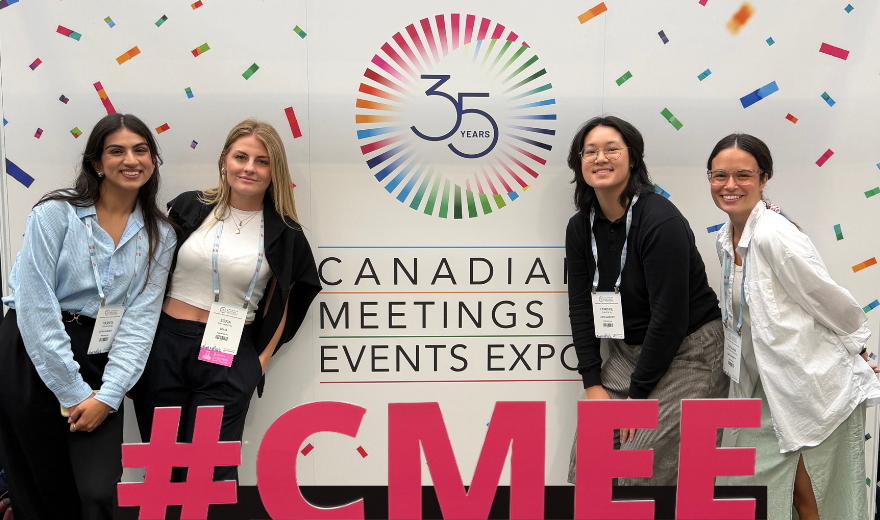
CMEE 2026: In an AI-Powered World, What Makes an Event Worth Attending?
By Catalina Wolniczek, Yashita Arora, Sofia Borregon, Christie Xu
Between conversations around leadership, AI, the attendee experience, and the future of connection, one question kept resurfacing throughout CMEE 2026: What makes an event worth someone’s time?
After a full day of industry insights, exploring creative exhibitor booths, and discovering a variety of destinations, we left with our creative juices flowing and plenty of inspiration for future planning. But beyond the show floor, it was the keynote sessions and think tank discussions that sparked some of the most meaningful reflections.
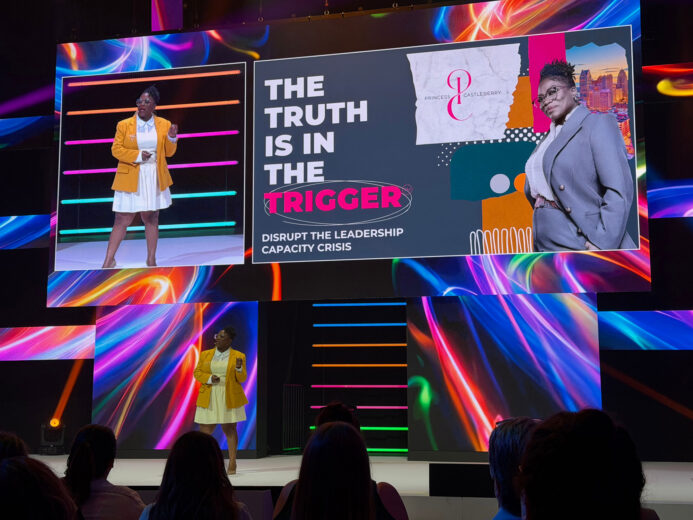
The Truth Is the Trigger
In events, there’s often an unspoken expectation to bring your A-game to every project, every meeting, and every attendee in interaction.
Princess Castleberry challenged the room full of event leaders to think about what happens when they have to constantly operate at maximum capacity. The reality is that not every situation requires the same level of energy, attention, or effort.
The lesson wasn’t about lowering standards. It was about being intentional with where you invest your capacity.
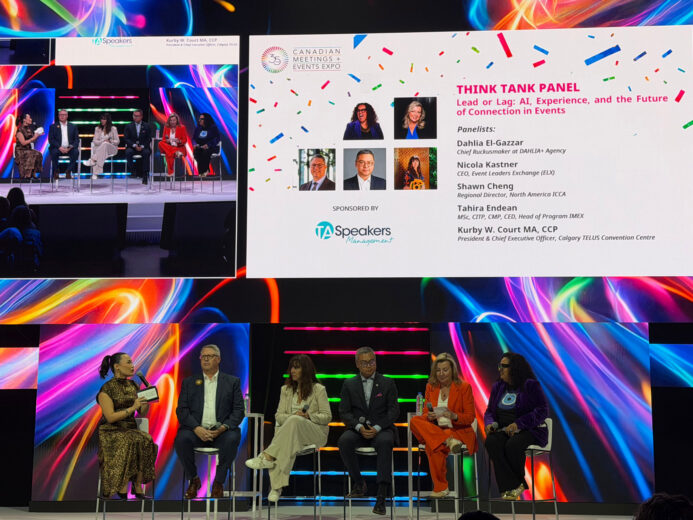
Automate the Friction, Protect the Connection.
In the panel session, Lead Or Lag: AI, Experience, and the Future of Connection in Events facilitated by Cherry Rose Tan, featuring guest speakers Dahlia El-Gazzar, Nicola Kastner, Shawn Cheng, Tahira Endean and Kurby W. Court, “Automate the friction, protect the connection” emerged as a key theme. The event leaders emphasized that AI delivers the most value when it streamlines operational tasks, allowing event professionals to invest more time in the human experiences that drive engagement and belonging.
Think meeting notes, research summaries, agenda building, RFP reviews, scheduling, translation, or data analysis. These are all areas where AI can save time and create capacity.
What should we do with that extra time? Be more human.
Build stronger attendee journeys. Have more meaningful conversations. Design intentional networking opportunities. Your attendees will always remember how an event made them feel.
AI Makes Average Easy
When everyone starts with the same prompt, consumes the same outputs, and uses the same tools, experiences begin to feel interchangeable.
For event organizers, that risk extends beyond marketing copy.It can show up in:
- Generic session descriptions
- Predictable attendee communications
- Repetitive stage formats
- Cookie-cutter event experiences
Tahira Endean encouraged attendees not to hand over their first draft thinking to AI. Ideas still need human perspective, context, and curiosity. AI can help refine a great idea, but it shouldn’t replace the process of developing one in the first place.
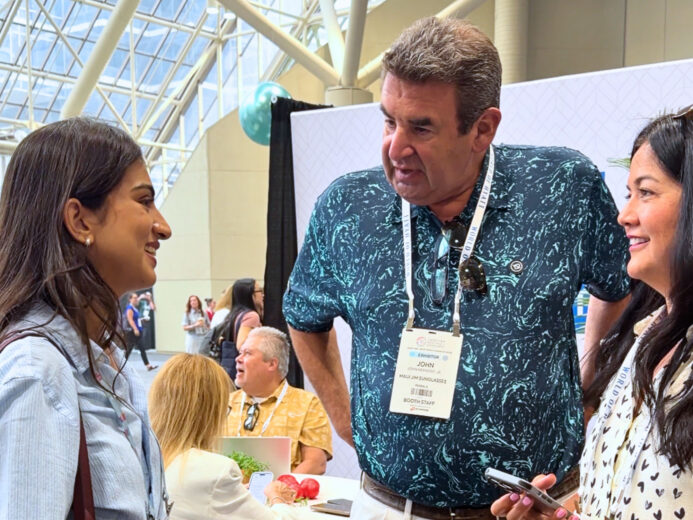
AI Doesn’t Pick Up the Emotional Moment in the Room
The event industry spends a lot of time talking about KPIs such as attendance, engagement rates, attendee traffic, and Net Promoter Score (NPS). These are all important metrics that AI can analyze exceptionally well.
However, AI cannot “read the room.”
It cannot detect when the audience becomes emotional, when a room suddenly becomes more engaged, when a meaningful conversation changes someone’s perspective, or when a casual conversation leads to a valuable new connection.
These are often the authentic moments attendees remember long after they’ve forgotten the agenda.
“Was This Event Worth Your Time?”
Shawn Cheng spoke about designing an attendee roadmap in which every touchpoint intentionally guides attendees toward a desired outcome, whether that’s learning something new, building a meaningful connection, or taking action after the event. Building on that idea, Dahlia El-Gazzar introduced “ELU aka Eyes Light Up”, as a new performance metric worth paying attention to.
It’s the moment when a keynote resonates; a conversation sparks a new idea, or an attendee discovers an unexpected opportunity. As Kurby W. Court pointed out, AI can analyze data and attendee behavior, but it still can’t recognize those emotional shifts in a room. Those moments matter because they’re often what attendees remember most, and ultimately what determines whether an event was truly worth their time.
Final Thoughts
If there was one theme connecting both sessions, it was this:
Technology should create capacity, not distance.
Whether we’re talking about leadership, AI, the attendee experience, or event design, the goal isn’t efficiency for efficiency’s sake. The goal is to create more room for meaningful conversations, stronger relationships, and memorable moments.
As AI becomes more integrated into the events industry, human connection doesn’t become less important. If anything, it becomes even more valuable.
The events that thrive in an AI-powered future won’t be the ones that automate the most. They’ll be the ones that use technology to create more opportunities for authentic human connection.
Which signal resonates most with you?
As event marketers, meeting planners, and experience designers continue to navigate AI, personalization, and evolving attendee expectations, we’d love to hear what ideas you’re bringing into your next event strategy. Connect with the LOMA team and join the conversation.